About
The empire made me. Then I went outside.
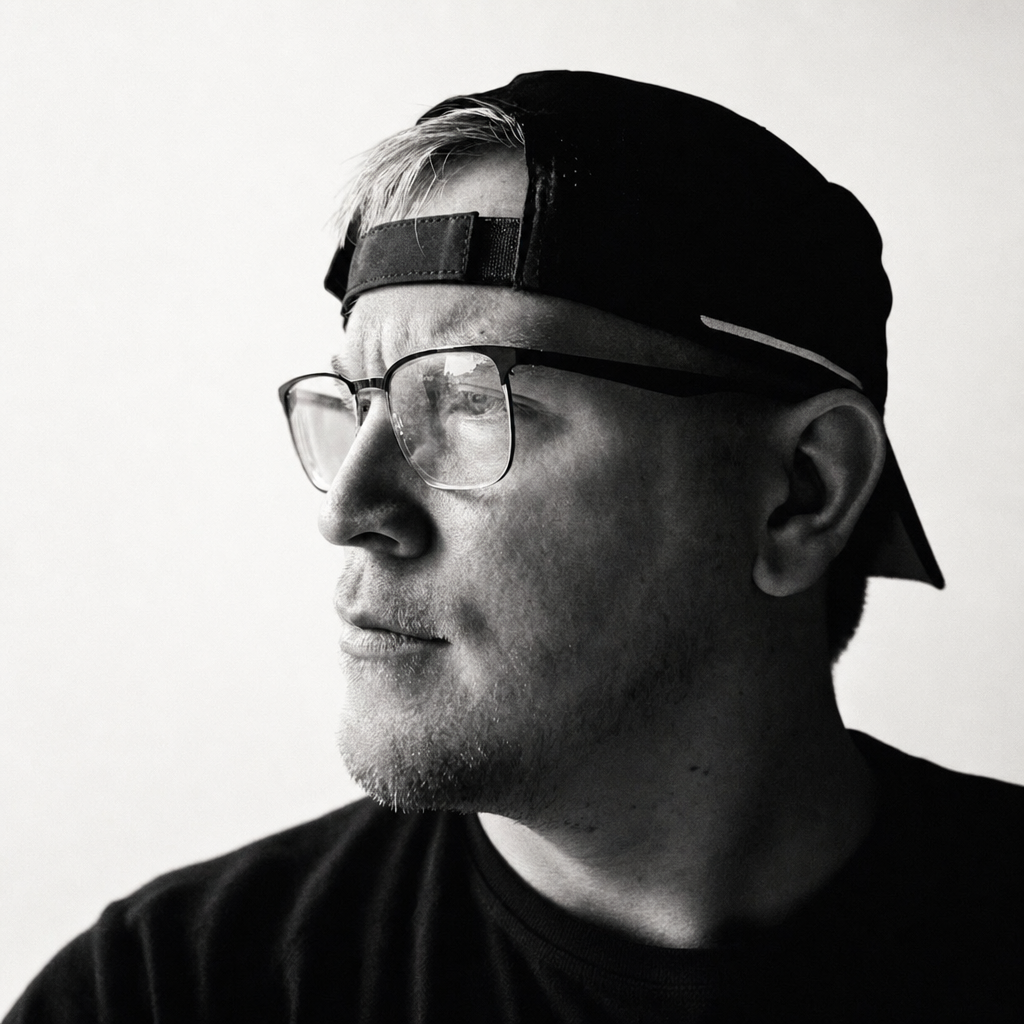
I'm Sam. Two national championships, six All-American honors — and the six years of study that taught me why none of it worked the way I was told it did.
The poster
For most of my athletic life, I was the proof of concept.
Two national titles. All-American six times over. The kind of results the coaching industry prints on the poster to sell you its catechism: talent is born, effort is holy, run the drills, want it more. I believed every word, because it appeared to be working. I was the evidence.
Here's what the poster doesn't show you: I got better despite the model, not because of it — and I had no idea until it stopped.
Every athlete who climbs high enough hits the same ceiling. Mine arrived the way it always does: the reps stopped translating. More effort produced more effort, not more distance. And the model had exactly one explanation left, the one it always keeps loaded — that something was wrong with me. Focus. Toughness. Want.
I'd been inside that answer long enough to know it was a lie. I just couldn't prove it yet.
Outside
So I did the one thing the empire cannot forgive.
I stopped asking it questions and went outside — six years deep into the science of how skill is actually built. Ecological dynamics. Perception. The design of practice environments. Not as a tourist with a podcast habit, but as a student of the research and a working practice designer, testing it with real athletes in real sessions.
What I found out there rearranged everything I thought I knew about my own career:
Skill was never talent plus effort. It's perception, built by environment. An expert and a beginner standing in the same arena are not seeing the same arena — the expert perceives openings and opportunities that, for the beginner, simply don't exist yet. The throwing circle I stood in as a champion was not the circle I stood in as a freshman. Same concrete. Different world. Years of training had rebuilt what I could see, and what you can see is what you can do.
Which means the ceiling I hit was never a character flaw. It was a design flaw — in practices that trained blind repetition and called it fundamentals. And the industry's favorite explanation, the one aimed at the athlete, was aimed at the wrong target all along.
Once you see that, you can't unsee it. And you can't stay quiet about it either.
What Resonance is
Resonance is where I take that apart in public.
- The letters
- They go out weekly — one argument, built piece by piece: how perception is trained, how environments shape skill, and why the coaching world keeps selling motivation for a sight problem. They're free, and they're written to one coach at a time.
- The mentorship
- This is where the letters become someone's actual Tuesday practice: a small number of coaches, one on one, inside their real programs, rebuilding how they design practice from the perception up. It runs on an application, a call, and a decision two people make together. No checkout page. No permission slips.
I call the method what it is — Perceive, Redesign, Transfer — and I call the stance what it is, too. In an industry whose catechism I'm here to take apart, I'm the villain. I've made my peace with that. The ones who need me to be smaller can call me exactly what I am.
Off the page
I live in Minnesota with my wife and our kids — our son arrives this September, which is why the first founding cohort begins . When we start, my people have all of me; when it runs, my coaches do.
And the framework doesn't stay in the gym. The same science that rebuilds an athlete's sight shapes how I write, how I build this business, and how I parent — because a child learning to walk is the purest constraints-led athlete you will ever watch. Nobody lectures them into it. The environment teaches. That's the whole philosophy, standing right there in the living room.
You weren't crazy. You were early.
If some part of you has always suspected the drill book was lying to you — that's the instinct this whole thing is built on.